
Alban Marissal
« Transcender la matière, du visible vers l'invisible »

Complete guide with diagrams and professional tips
| Tools / Supplies | Detail |
|---|---|
| Tape measure | To measure the height and centre the frame |
| Spirit level | Essential for a straight result |
| Pencil | For marking on the wall |
| Drill + 6 mm drill bit | For hard walls (concrete, brick) |
| 2 dowels + 2 screws | Ø6 plugs for hard wall, or Molly plugs for plasterboard |
| Hammer | To drive in the plugs |
| String + adhesive tape | For the marking method (see diagram) |
Determine the height. The centre of the frame should be 150 cm from the ground (eye level). For a 55 cm high frame, the top edge will be 177.5 cm from the floor.
Measure the distance between the ties. Turn the frame over and measure the distance between the two fasteners on the back. Place your 2 fixings about 50 cm apart, centred on the wall.
Mark the points on the wall. Using a ruler and spirit level, mark the 2 drilling points with a pencil. Tip: stick a piece of adhesive tape on the wall before marking to protect the paint.
Drilling and dowelling. Drill with a 6 mm drill bit, hammer in the dowels, then screw in the screws, leaving 5 mm protruding from the head.
Hang and adjust. Place the frame on the screws. Use the spirit level on top to check that it is level. Adjust if necessary by slightly unscrewing a screw.
If your frame is fitted with pitons at the rear, tension a steel wire between the two. This allows you to use justone screw on the wall and makes horizontal adjustment easier.
Concrete/brick: conventional Ø6 plugs.
Plasterboard: Molly or toggle plugs.
Wood: screw directly, without dowel.
A 75×55 cm frame weighs between 3 and 6 kg, depending on the material. Check that your fixings can withstand at least 10 kg for safety.
Stick small felt or cork pads to the back 4 corners of the frame. This protects the wall and prevents the frame from slipping.
For fragile or rented walls, use high-strength adhesive hooks (Command 3M type) that can withstand up to 7 kg.
Beware of pipes and electrical wires! Before drilling, use a metal/cable detector, especially near sockets and switches. If in doubt, offset your fixing point by 20 cm.
| Part | Centre height | Why? |
|---|---|---|
| Living room / Entrance | 150 cm from floor | Eye level, standing position |
| Above a sofa | 25-30 cm above the backrest | Creates a visual link with the furniture |
| Corridor | 150-155 cm from the floor | You are standing and passing through |
| Dining room | 130-140 cm from the floor | Often seated, looking down |
| Bedroom (above the bed) | 20-25 cm above the headboard | Visible from the bed and standing up |
11 voix singulieres, representees par Starck Gallery a Elche
« Transcender la matière, du visible vers l'invisible »

« When Pop Art Meets Diamonds »


« Transforming memory into color and light »
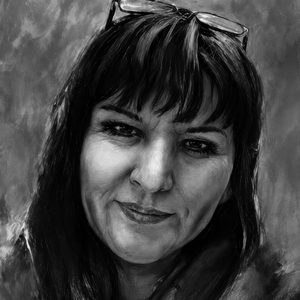
« Painting inner states, between energy and silence »

« The horizon, the void, and a single detail that catches the eye »

« The Mediterranean in layers of color and emotion »

« Waves of color where gold becomes light »


